Unbound Drift
Creative Co-Director (Early Development)
2024-2025, available on Steam, positive early reviews

Game Jam
Unbound Drift started as a week-long passion project where I was tasked with directing a game in my design partner’s custom engine. I wanted a game with flight and physics, something to experience G-forces and demand great skill to maneuver.
This idea combined with the engine's 2d, vector-based graphics and became a swinging physics game that we simply could not stop playing.
We would build levels to challenge each other and started making puzzles and racing across them, keeping an informal leaderboard of speedrun times in our Discord chat.
Eventually, we realized that we had the majority of a game on our hands, and decided to take it as far as we could.
Movement lessons
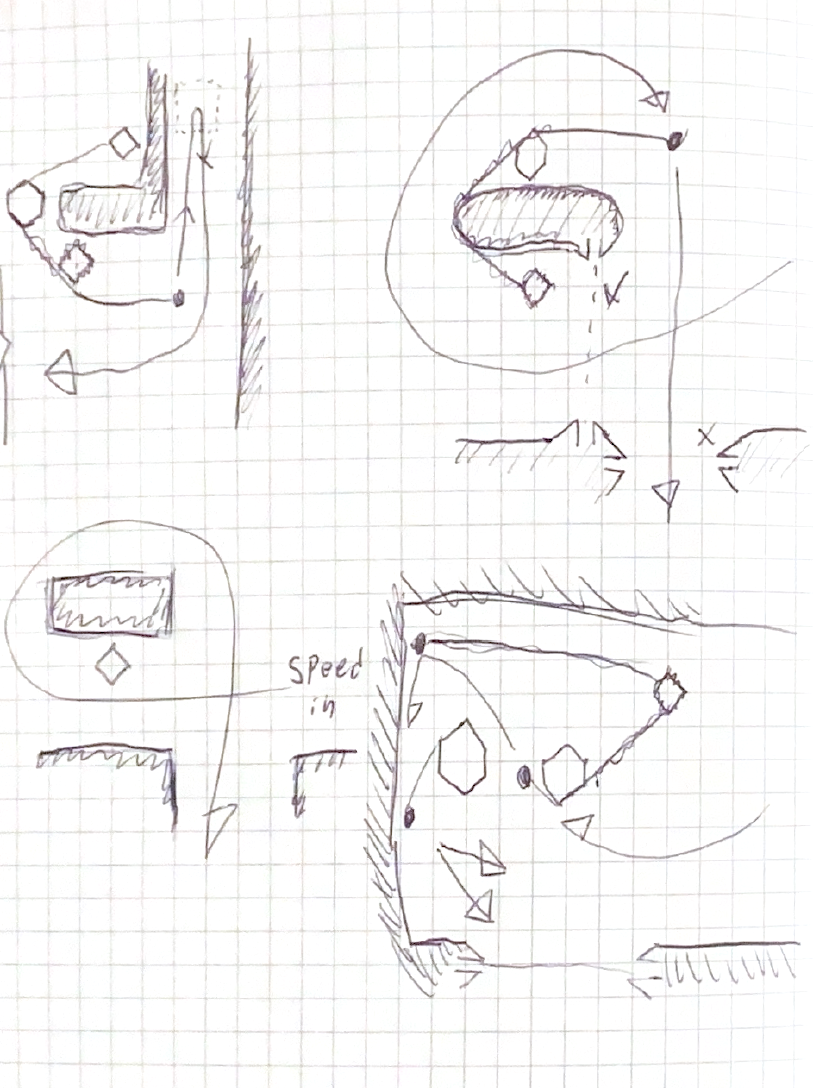
After playtesting the mechanics ourselves for weeks, we tried to categorize and name specific types of movements we found ourselves doing, such as bouncing off objects, adjusting course slightly, or timing large jumps. We created a list of movements to teach the player and began brainstorming level section layouts that either demanded the skill to move forward or caused the player to do the action implicitly.
Some of these sections were about having players enter areas with momentum, such as after a fall, and having the only available grab point be one that causes the motion we wanted to create. Players would accidentally perform the motion and remember it later.
But many of the movement lessons required the creation of new mechanics, such as the electrified grab points that turned the player's line into a power cable.
Using this in conjunction with layouts that could only be exited with certain amounts of momentum, we could require players to swing in very specific ways before the cables connect and open the door.
Two spaces in one
Unbound Drift’s movement is unintuitive and takes a great deal of time to master.
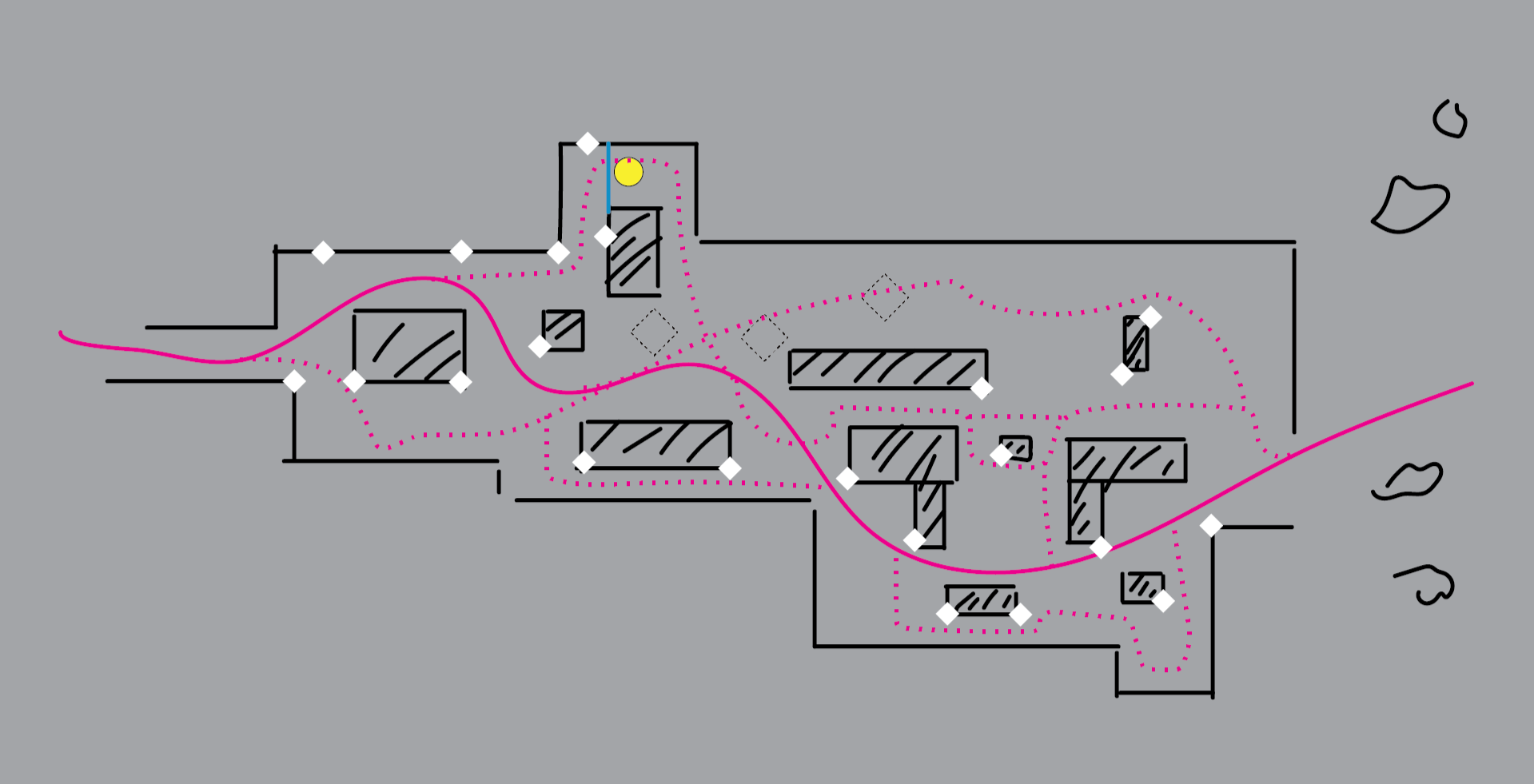
The goal for the level design was to build early levels that were generous and invited exploration for first-time players, encouraging them to spend enough time in this world to become masters. But the same space had to challenge speedrunners with finding the fastest route.
The goal for later levels was to challenge both players. Giving the first-timers a mountain to climb and giving speedrunners a puzzle to optimize.
Part of the varied experience was creating optional collectibles with incredibly high skill requirements to get, allowing players to choose how much to challenge themselves.
The rest was just testing the game a lot, asking new people to test the game or playtesting with our non-dominant hand to simulate a lack of refined skill with the movement, but also testing the same level with maximum effort, trying to find the best path.
Then, with both experiences mapped out, we would smooth out friction and discuss where it may be too hard for one type of player, or the other.
For example, a large gap as a challenge for a first-time player, requiring them to show they can create momentum and launch long distances semi-accurately. But for speedrunners in the same section, if they can continue flying beyond the landing site and find a path to convert that sideways momentum in another direction, they will find a faster path through the next section.
Effectively, letting them do one challenge so well, it made the next challenge irrelevant.