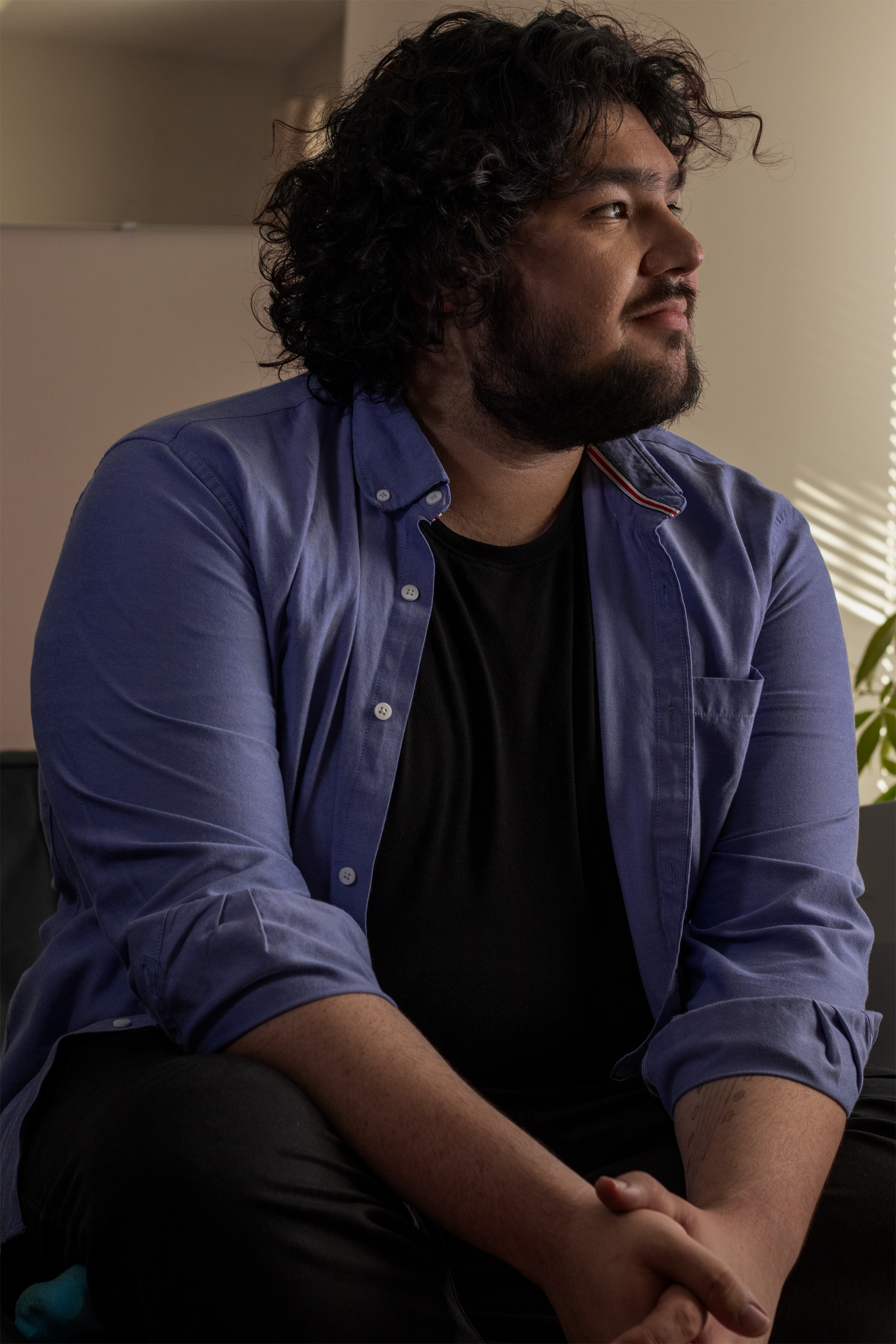
Terran Camaclang
Game Designer Portfolio
About me
I grew up as the child of an interior designer, with discussions about the invisible guidance of design. My mother would talk about how the shape of spaces affects how we feel about them, which in turn changes how we interact with them.
These lessons followed me into my VFX career, where I worked with lighting, colour, and texture to guide the eye where it needed to be. The goal was always to create a sense of reality while keeping the audience focused on what was important.
When I went into composing, harmony, dissonance, and harmonic movement gave me the ability to affect emotions more directly. Creating and relieving tension to tell a story.
Now, in my work on TTRPG’s and Videogame design, I have fallen in love with the ability to encourage player actions through systems and layouts.
Much like laying out a home, you can create spaces that welcome certain interactions to guide people towards what they will enjoy best.
Such as giving bar stools to chat with the cook, instead of having them stand in the kitchen and be in the way.
I have always been drawn to the idea that a good design doesn't feel like something crafted, but instead feels like the natural outcome of engaging with the material.
Sitting on the barstool just because it seemed comfortable.
Unbound Drift
Creative Co-Director (Early Development)
Creative and structural design
Unbound Drift began as a personal game jam where my friend was creating an engine and asked me to design a game within it. I asked for a game with a strong feeling of flight and reviewed and gave feedback on playtests and helped design the physics and movement on paper. I had a strong vision on how much gravity, bounce, tension and stretch things should have.
Quickly, we began making levels to challenge each other and making larger sections that eventually became the full game.
The feeling of Mastery
We felt strongly that Unbound Drift was a game for the player to learn and master. For that reason, we rejected any concepts of levelling up your character or gaining additional skills or abilities in-game.
Every move that is available at the very end of the game needed to be possible at the very beginning. Players would be invisibly taught skills and begin to incorporate them into their normal movement through the world, until they looped around through all the levels, back to the first level and felt the dramatic difference of moving through the space before and after their mastery.
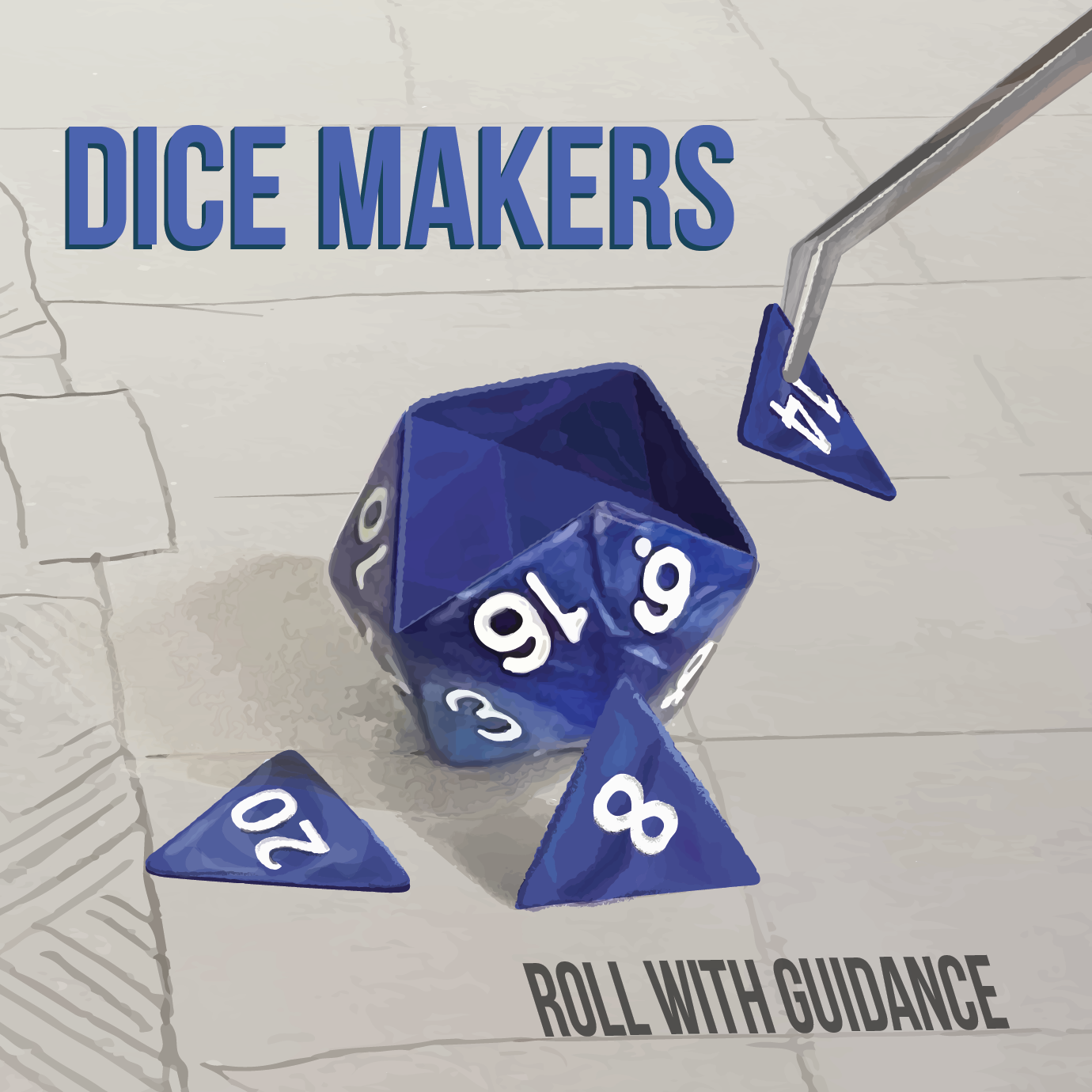
Dice Makers
Host and Producer
Podcast
Dice Makers was an 11-episode podcast I hosted where we discussed TTRPG mechanics and designed our own game on-mic. We explored topics such as dice math, the role of information in TTRPG’s, and non-combat mechanics through the lens of both narrative and structural design.
World Generation
The system we created included a multi-generational system where players first played as the parties that built the city through a card game, then as people within the city.
Giving players intimate knowledge of the city’s inner workings, without exposition.
Combat
The goal of our combat system was to have combat feel realistic, tactile, and messy.
Players would gain positional advantages before attempting to wound enemies, creating a fight over dominant positions before any attempts to deal damage.
Teaching new players
In my 8 years of D&D experience, I have primarily run games for new players.
To help guide and teach new players to TTRPGs, I have created a simplified version of D&D 5e that allows them to experience the game with less friction.
D&D 5e
Game Master
System Changes
I have made several changes to the D&D 5e core mechanics. Such as reworking the death system and altering initiative structures.
These changes were all in the service of creating a more immersive and collaborative experience.
Homebrewed classes and monsters
Nearly every player in my D&D games ends up playing a fully homebrewed class, one far stronger and more specific than the base 5e options.
Classes that I created based on their character requests, including a mind-reading tea monk, a shapeshifting warlock, or simply a tactician barbarian.


VFX work
Compositor
Production lens
I have been fortunate to get to work on many sides of the VFX industry, from fast-turnaround TV projects to Marvel films with months spent on tiny details. And after working with large companies, including Sony Imageworks, Method, and Framestore, I have extensive experience working across departments, in large teams and learning new pipeline frameworks.
Scope and time concerns are built into my way of thinking. With personal projects, freelance work, and in the VFX industry, it’s always wise to recognize constraints and work within them.
VFX website: terranvfx.com
Adaptable
I have always prided myself on being a fast learner and have been able to apply that skill in my career many times.
When I joined the final crunch of an animated show, I wasn't able to take on shots directly as a compositor without lighting experience. The pipeline was set up for a compositor/lighter to handle shots on their own, and so there were no tasks with only compositing work to be done.
As a result, I became a floating support that people could call on to help when a complex problem arose and they didn't have time to diagnose the issue, and I began creating tools to be used by the team to help speed up the work, including giving a live demonstration on how to use my tools to the entire department. The team expressed a lot of appreciation for the support, and the tools were used by nearly all artists for the final product.
Get in Touch!
Schedule a free 1:1 introductory session with me to discuss your web design needs.
